
What is PRP Therapy and How Does It Work? Your Complete Guide to Platelet-Rich Plasma Treatment
Discover How PRP Harnesses Your Body’s Natural Healing Power to Relieve Pain and Restore Mobility
If you have been dealing with chronic joint pain, stubborn tendon injuries, or arthritis that limits your ability to enjoy life in the Dallas area, you might have heard about platelet-rich plasma therapy as a potential solution. At Signature Orthopedics in Mesquite, Texas, Dr. Obi Osuji and his dedicated team have witnessed firsthand how this innovative regenerative treatment helps patients avoid surgery, reduce pain, and return to the activities they love. PRP therapy represents a cutting-edge approach that uses your own blood to accelerate healing, making it one of the safest and most effective options available in modern orthopedic care.
Dr. Osuji, a board-certified orthopedic surgeon and Fellow of the American Academy of Orthopaedic Surgeons (FAAOS), brings extensive expertise to every PRP treatment. With his medical degree from Stanford University, orthopedic surgery residency at Howard University, and fellowship in total joint reconstruction at the Prisma Health Steadman Hawkins Clinic, Dr. Osuji combines advanced training with a commitment to conservative, personalized care. At Signature Orthopedics, we believe in exploring all non-surgical options first, and PRP therapy has emerged as a powerful tool that harnesses your body’s natural healing mechanisms to treat conditions that once seemed destined for the operating room.
What PRP Therapy Actually Is and How It Works
Platelet-rich plasma therapy is a form of regenerative medicine that concentrates the healing components found naturally in your blood and delivers them directly to injured or diseased tissue. The process begins with a simple blood draw, typically one to a few vials, right here in our Mesquite office. Your blood is then placed into a specialized centrifuge machine that spins at high speeds to separate the different components. This separation process isolates platelets from red blood cells, white blood cells, and other elements, creating a concentrated solution that contains five to ten times more platelets than your normal blood.
Why does this concentration matter? Platelets are best known for their role in blood clotting, but they also contain hundreds of proteins called growth factors that are critical for healing damaged tissue. When these growth factors are concentrated and injected into an injury site, they trigger your body’s natural repair processes, stimulating cell reproduction, reducing inflammation, and accelerating tissue regeneration. The entire PRP preparation and injection process typically takes less than one hour, making it a convenient outpatient treatment that fits into your schedule without requiring extended time away from work or family.
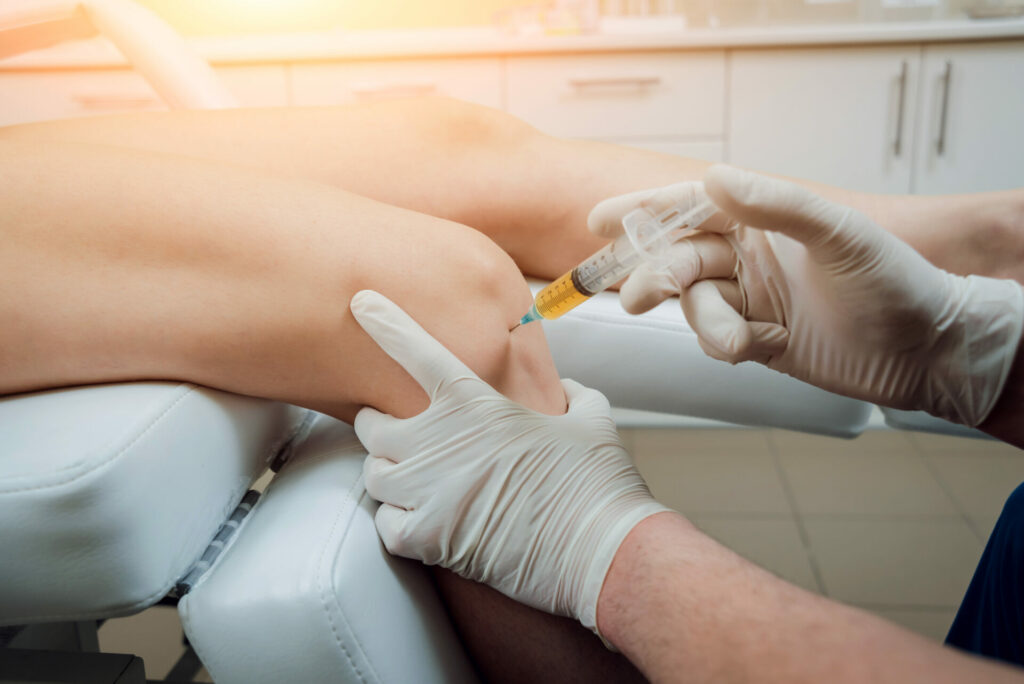
Dr. Osuji often uses ultrasound guidance during the injection to ensure precise placement of the PRP directly into the affected area, whether it is a damaged tendon, inflamed joint, or injured ligament. Because PRP comes from your own blood, your body cannot reject it, which makes this treatment remarkably safe with minimal risk of adverse reactions.
Conditions We Treat with PRP Therapy at Signature Orthopedics
Research and clinical experience have demonstrated that PRP therapy can effectively treat a wide range of orthopedic conditions. At Signature Orthopedics, we consider PRP as a treatment option for patients throughout the Mesquite and Dallas area who are dealing with chronic tendon injuries, including tennis elbow, golfer’s elbow, rotator cuff tendinitis, Achilles tendonitis, and jumper’s knee. These conditions often take a long time to heal with traditional treatments alone, but studies show that the increased concentration of growth factors in PRP may speed up the healing process, decrease pain, and enable patients to return to activities sooner.
PRP therapy has also shown promising results for patients with osteoarthritis, particularly in the knee joint. Recent research indicates that PRP treatment is superior to hyaluronic acid injections for knee osteoarthritis, especially regarding the duration of its positive effects. While PRP is not a cure for arthritis, it can help reduce pain and inflammation, particularly in early-stage osteoarthritis, and may delay or eliminate the need for joint replacement surgery.
Beyond arthritis and tendinitis, we use PRP therapy to treat ligament sprains in the knee, ankle, and other joints, as well as muscle strains that can sideline active individuals. For patients recovering from sports injuries or orthopedic trauma, PRP can potentially accelerate healing and improve overall function. Dr. Osuji evaluates each patient individually to determine whether PRP therapy is appropriate for their specific condition, taking into account the severity of the injury, overall health, and treatment goals.
The PRP Treatment Process and What to Expect
When you come to Signature Orthopedics for PRP therapy, Dr. Osuji begins with a comprehensive evaluation to ensure this treatment is right for you. During your consultation, he will review your medical history, examine the affected area, and may use imaging studies to fully understand your condition. If PRP therapy is recommended, you will receive detailed instructions on how to prepare, which may include temporarily stopping certain anti-inflammatory medications that can interfere with platelet function.
On the day of your treatment, the process starts with the blood draw. The blood is immediately processed in our centrifuge, which takes just minutes to concentrate the platelets. Once the PRP is prepared, Dr. Osuji carefully injects it into the targeted area, often using ultrasound imaging for precision. You may feel a slight pinch or pressure during the injection, and in some cases, local anesthetic is used to minimize discomfort. After the injection, you may experience some soreness at the treatment site for a few days, which is a normal part of the healing response.
Most patients begin to notice improvement within four to six weeks, though the healing process continues for several months as new tissue forms and strengthens. The effects of PRP therapy can last six months to a year or longer, depending on your condition. Some patients achieve their desired results with a single injection, while others may benefit from additional treatments spaced several weeks apart. Dr. Osuji will work with you to develop a personalized treatment plan that may include physical therapy, activity modification, and follow-up care to optimize your results and support long-term joint health.
Why Mesquite Residents Choose Signature Orthopedics for PRP Therapy
What sets Signature Orthopedics apart is our commitment to providing advanced, evidence-based treatments in a compassionate, patient-centered environment. Dr. Osuji understands that navigating orthopedic care can feel overwhelming, which is why he takes the time to explain your options thoroughly and answer all your questions. Whether you are a competitive athlete looking to return to sports, a weekend warrior dealing with overuse injuries, or someone simply trying to manage chronic joint pain that affects daily activities, we tailor our approach to your unique needs and goals.
Located conveniently in Mesquite at the intersection of Tripp and Galloway, Signature Orthopedics serves patients throughout the Dallas area who are seeking alternatives to surgery and long-term medication use. PRP therapy represents one of many advanced treatment modalities we offer, alongside minimally invasive surgery, joint replacement, and comprehensive rehabilitation services. Our goal is always to help you achieve optimal joint health and function using the least invasive approach possible, and PRP therapy often allows us to accomplish exactly that.
Ready to explore whether PRP therapy is right for your joint pain, tendon injury, or arthritis? Contact Signature Orthopedics to schedule a consultation with Dr. Obi Osuji. Discover how this innovative regenerative treatment can help you regain strength, reduce pain, and return to the activities that matter most. Your path to renewed mobility and lasting relief starts here.