
Hip Pain That Won’t Quit Deserves Real Answers
Whether your pain comes from a labral tear, arthritis, or something still undiagnosed, Dr. Osuji evaluates every patient from scratch, and builds a treatment plan around your hip, your life, and your goals.
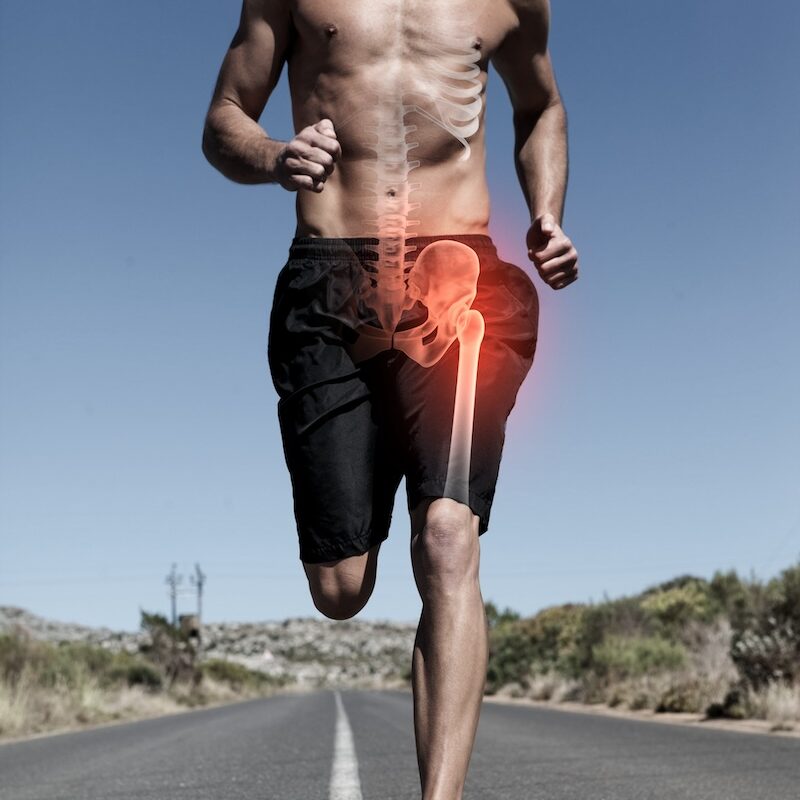
Understanding your pain
Common Causes of Hip Pain
The hip is a ball-and-socket joint that bears your body weight with every step. Pain can arise from the cartilage, the soft tissue lining, the bones themselves, or the structures surrounding the joint.
Labral Tears
The labrum is a ring of cartilage that helps seal and stabilize the hip socket. Tears often develop from impingement, repetitive motion, or athletic activity and can cause a deep, catching ache in the joint. Left untreated, they may contribute to faster joint wear.
Osteoarthritis
Osteoarthritis occurs when the cartilage cushioning the joint gradually wears away. As the joint surfaces begin to rub together, patients often experience stiffness, pain with weight-bearing, and reduced range of motion, especially in the morning or after inactivity.
Femoroacetabular Impingement (FAI)
FAI develops when the bones of the hip are shaped in a way that causes the femoral head to pinch against the rim of the socket during movement. Over time, this repeated contact can damage the labrum and cartilage, leading to pain and loss of function.
Bursitis and Tendinitis
Inflammation of the bursae or tendons around the hip can lead to pain along the outer hip and tenderness with movement or pressure. These conditions are often aggravated by overuse, prolonged activity, or lying on the affected side.
Inflammatory Arthritis
Conditions such as rheumatoid arthritis can cause the immune system to attack the joint lining, leading to swelling, warmth, stiffness, and pain. Inflammatory arthritis may also be accompanied by fatigue and symptoms affecting other joints.
Fractures and Acute Injuries
Falls, trauma, and stress fractures can cause sudden and severe hip pain. In older adults especially, hip fractures require prompt evaluation and often surgical treatment to restore stability and mobility.
Our Approach
Diagnosis First, Then Treatment
Dr. Osuji takes the time to understand not only where your hip hurts, but why it hurts and how it is affecting your daily life. Every evaluation includes a detailed medical history, physical examination, and targeted imaging such as X-rays, MRI, or CT scans when needed. The goal is always to establish an accurate diagnosis before recommending treatment.
Conservative Care First
Many patients can achieve meaningful relief without surgery. When appropriate, treatment begins with non-surgical options such as anti-inflammatory medications, guided physical therapy, activity modification, and targeted injections including corticosteroid or PRP therapy.
Joint Preservation Whenever Possible
Preserving the natural hip joint is always a priority when possible. Early diagnosis and treatment can help slow progression, reduce damage, and potentially delay or avoid the need for joint replacement surgery.
Our Approach
When Surgery Is the Right Next Step
Conservative treatment works well for many patients, but surgery may be the best option when pain continues, joint damage becomes advanced, or a structural issue such as a labral tear requires repair.
Minimally invasive
Hip Arthroscopy
Hip arthroscopy is a minimally invasive procedure performed through small incisions using a camera and specialized instruments. It is often recommended for patients with labral tears, femoroacetabular impingement, cartilage damage, or loose bodies within the joint.
- Labral repair or reconstruction
- Bone reshaping for FAI
- Cartilage treatment
- Faster recovery than open surgery
Long-term relief
Total Hip Replacement
When the joint is no longer suitable for preservation due to advanced arthritis, avascular necrosis, or severe degeneration, total hip replacement can provide reliable pain relief and restore function.
- Advanced osteoarthritis or avascular necrosis
- Severe joint damage that has not responded to other treatments
- Significant limitations in mobility and quality of life
- Long-term relief with modern implant technology
Anterior Approach Hip Replacement – Less Cutting, Faster Return
Dr. Osuji performs total hip replacement using a muscle-sparing anterior approach. Unlike traditional posterior techniques, the anterior approach works between muscle groups rather than detaching them. For many patients, this can mean less post-operative pain, fewer movement restrictions during recovery, and a quicker return to walking and daily activities.
Is it time to see a specialist?
Signs Your Hip Pain Should Be Evaluated
Not every ache requires surgical care, but certain symptoms may signal an underlying structural problem that deserves expert evaluation.